
A Complete Guide to Turbine Vibration Diagnostics
Learn all about turbine vibration diagnostics and how to increase the life of your equipment.

Jon Thornham
Founder
Fitness for Service
In heavy industry, pressure vessels, storage tanks, piping, and rotating equipment operate at the limits of mechanical design every day. High temperatures, internal pressures, cyclic loading, corrosion, and process upsets all work to degrade equipment over time.
While scheduled inspections help identify problems, the bigger question remains: Is this equipment still safe to run? And if not, what does it take to repair or return it to service without unnecessary cost or downtime? This is where Fitness-for-Service (FFS) assessments come in.
Fitness-for-Service is a structured engineering evaluation used to determine whether in-service equipment is safe to continue operating despite flaws, damage, or deterioration. Modern FFS practices are governed by the API 579-1 / ASME FFS-1 standard.
For mills, refineries, power plants, and chemical facilities, FFS enables informed maintenance decisions—improving uptime, reliability, and maintenance budgets.
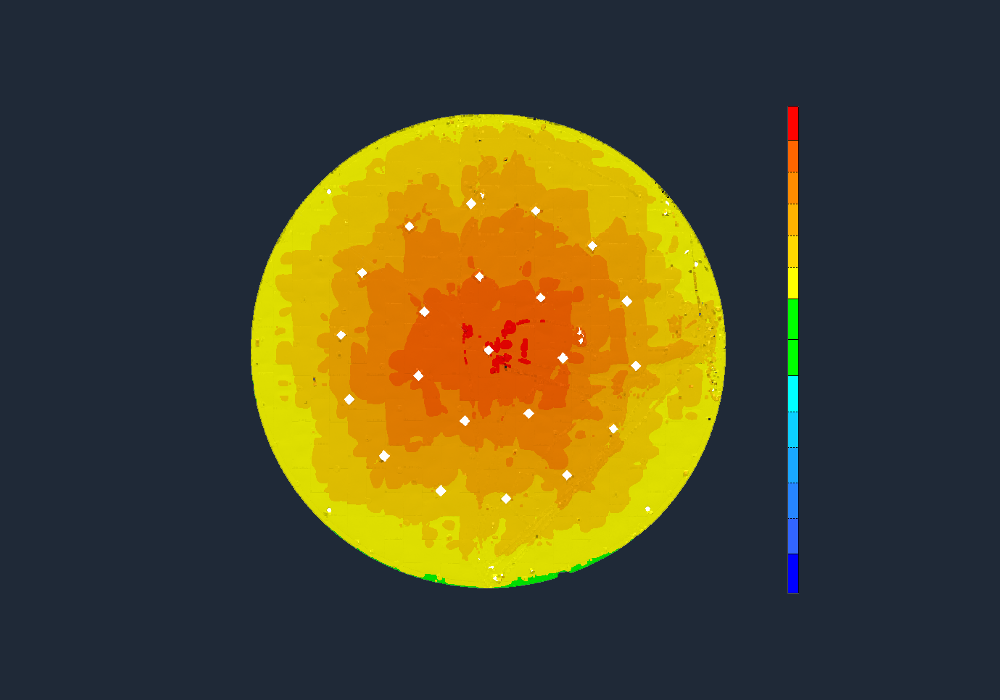
Fitness-for-Service is a formal, codified engineering approach that answers one question:
Rather than replacing equipment by default, an FFS evaluation compares the severity of damage against allowable limits in API 579, using stress analysis and fracture mechanics as needed.
A quick, conservative check to avoid unnecessary shutdowns when the damage is clearly within acceptable limits.
Uses simplified analytical methods—typically performed by mechanical engineers experienced in FFS.
Required when equipment is severely degraded or mechanisms are complex—often the difference between scrapping a component or returning it to service with engineered limits.
Unexpected failures drive cost and risk:
FFS supports better decisions by determining:
Typical repair or mitigation outcomes include:
API 579 covers nearly every form of deterioration encountered in the field:
For each mechanism, FFS provides quantitative methods to determine safety and remaining life.
Define the damage and operating context:
Gather NDE, measurements, and supporting data:
Using design codes, operating pressures, and actual loading, stresses are calculated for the damaged region.
Engineers choose the correct procedure from the code based on the damage type.
Evaluate against allowable limits for:
Based on results, recommended actions may include:
A complete engineering report supports decision-making and regulatory requirements.
Captures high-accuracy, full-scale geometry for degraded equipment and feeds Level 3 models:
For complex geometries or severe damage, FEA provides:
For rotating equipment with fatigue or crack concerns:
Consider FFS when any of the following occur:
FFS is especially valuable when downtime is costly or the component is difficult to replace.
FFS aligns with risk-based, economically optimized maintenance strategies:
Fitness-for-Service transforms inspection findings into clear, actionable decisions that balance safety, reliability, and cost.
With API 579 methodology, advanced diagnostics, and modern tools like 3D laser scanning and vibration analysis, facilities can operate with confidence.
If your facility is facing corrosion, cracking, distortion, metallurgical degradation, or vibration-related fatigue, an FFS assessment can determine the safest, most cost-effective path forward.
If you are seeing vibration issues on motors, fans, piping, turbines, or structural systems, this article covers only one piece of the diagnostic process. Our comprehensive Vibration Analysis and Engineered Correction guide shows how we use modal testing, ODS, FRFs, FEA, and field measurements to identify root causes and engineer permanent fixes.
Learn all about turbine vibration diagnostics and how to increase the life of your equipment.
Jon Thornham
Founder
Author Details
Founder
Jon Thornham is the founder of Vibration Engineers, a professional mechanical engineer, and entrepreneur focused on solving complex vibration and reliability challenges across industrial sectors.