A Complete Guide to Laser Scanning & Reality Capture
Learn all about laser scanning and reaality capture and how it can help your facility.

Jon Thornham
Founder
Turbine Vibration Diagnostics
Turbines are among the most critical and complex rotating machines used in industrial operations. Power plants, refineries, chemical facilities, steel mills, and midstream assets all depend on steam, gas, or process turbines to deliver stable, continuous power and mechanical work.
When a turbine experiences elevated vibration, even for a short period, the consequences can be severe. High vibration accelerates wear, impacts bearing life, creates thermal instability, reduces efficiency, and can lead to catastrophic failure or unplanned outages. Because turbines operate at high speeds, under tight mechanical tolerances, and in harsh thermal environments, turbine vibration issues must be diagnosed accurately and resolved quickly.
When a turbine experiences elevated vibration, even for a short period, the consequences can be severe. High vibration accelerates wear, impacts bearing life, creates thermal instability, reduces efficiency, and can lead to catastrophic failure or unplanned outages. Because turbines operate at high speeds, under tight mechanical tolerances, and in harsh thermal environments, turbine vibration issues must be diagnosed accurately and resolved quickly.
This article provides a comprehensive, practical explanation of what turbine vibration diagnostics is, how it works, what data is needed, and why facilities rely on specialists to perform these evaluations.
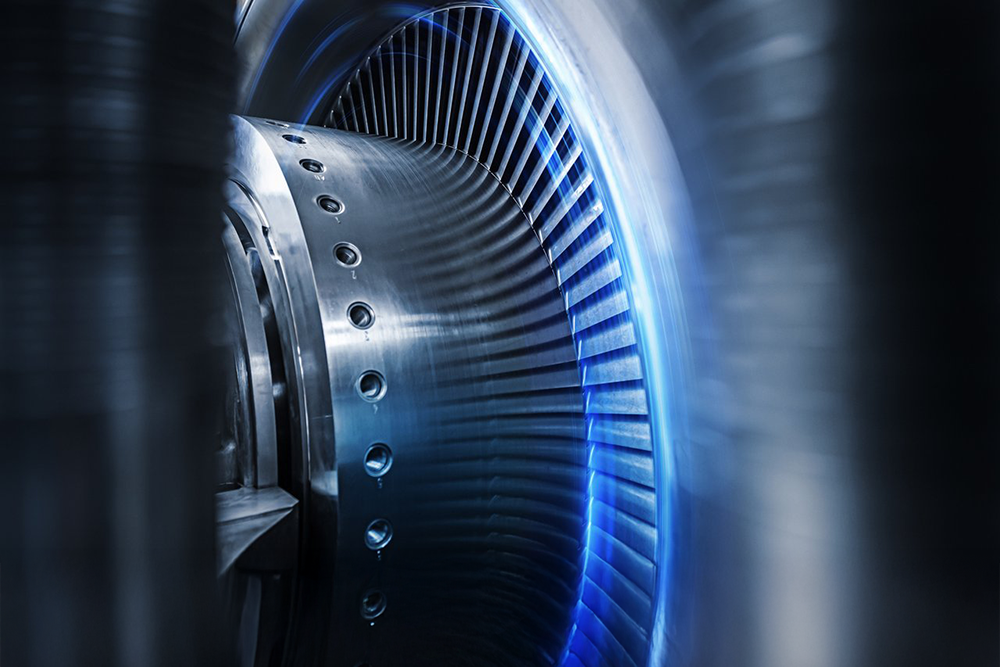
Turbines operate under very demanding conditions:
Because of this, even small shifts in balance, alignment, or structural stiffness can create significant vibration. A vibration problem is often a symptom—not the root cause. Turbine vibration can originate from the rotor, bearings, seals, baseplate, generator, or external forcing functions such as blade-pass events or process disturbances.
When vibration exceeds specified thresholds:
A turbine trip is expensive, but a turbine failure is catastrophic. This is why vibration monitoring and vibration diagnostics are essential to maintaining turbine reliability.
Turbine vibration diagnostics is the engineering process of collecting, analyzing, and interpreting vibration and dynamic data to determine the cause of vibration in a turbine. This involves combining:
The goal is simple: identify the specific mechanism causing vibration and recommend an engineered corrective action.
Diagnostic work typically occurs when:
Because turbines are complex systems, the root cause is rarely obvious without a structured diagnostic approach.
Turbine vibration issues typically stem from one or more of the following sources:
Because multiple issues can occur simultaneously, a solid diagnostic process must differentiate between primary and secondary vibration sources.
A professional turbine vibration investigation follows a structured workflow. Each step builds on the last to provide a clear engineering conclusion.
Effective diagnostics begin with communication. Engineers gather information from plant personnel:
Understanding the operating environment helps narrow the most likely causes.
Modern diagnostics rely heavily on high-resolution, synchronous vibration data. This includes:
Understanding the operating environment helps narrow the most likely causes.
Critical data is collected during:
This provides a complete dynamic picture of the machine.
Rotordynamics is at the heart of turbine diagnostics. The rotor’s response is analyzed to determine:
This determines whether the vibration is mechanical, hydrodynamic, thermal, or structural in origin.
Not all vibration is caused by rotor problems. External or aerodynamic forces often influence turbine behavior. Engineers review:
Matching forcing frequencies to measured vibration peaks is critical for accurate diagnosis.
Because turbine stability depends on fluid-film bearings, diagnostics include a detailed assessment of:
Even small bearing issues can drastically affect rotor stability.
Engineers assess whether the vibration originates from the turbine’s support structure:
Turbine vibration solutions often require structural modifications, not rotor adjustments.
Once the data is fully analyzed, the root cause becomes clear. Typical recommendations may include:
The goal is always the same: restore turbine stability and reliability with minimal downtime and maximum safety.
Turbine vibration is not something that can be diagnosed by guesswork or by looking at a single vibration reading. Modern turbines require:
Without a trained diagnostic specialist, it’s easy to misinterpret vibration data and correct the wrong problem—leading to repeated trips, extended outages, or damaged equipment.
Professional diagnostics saves facilities millions by:
You should initiate a turbine diagnostic assessment when:
In general, any turbine vibration behavior that is new or unexplained requires professional investigation.
Let us help you identify the problem with your trubine and provide an engineered solution to correct the problem.
Turbines are the workhorses of industrial operations, and maintaining their stability is essential for safe, efficient, and reliable performance.
Turbine vibration diagnostics provides a systematic, engineering-driven approach to understanding why a turbine vibrates, how severe the issue is, and what corrective actions are required.
From multi-channel vibration testing to rotordynamic modeling and structural evaluation, a professional diagnostic assessment delivers clarity, confidence, and actionable solutions.
Whether you are facing a high-vibration alarm, a chronic instability issue, or a newly emerging trend, turbine vibration diagnostics ensures that your equipment operates safely and efficiently—minimizing downtime, reducing cost, and preventing catastrophic failures.
If you are seeing vibration issues on motors, fans, piping, turbines, or structural systems, this article covers only one piece of the diagnostic process. Our comprehensive Vibration Analysis and Engineered Correction guide shows how we use modal testing, ODS, FRFs, FEA, and field measurements to identify root causes and engineer permanent fixes.
Learn all about laser scanning and reaality capture and how it can help your facility.
Jon Thornham
Founder
Author Details
Founder
Jon Thornham is the founder of Vibration Engineers, a professional mechanical engineer, and entrepreneur focused on solving complex vibration and reliability challenges across industrial sectors.