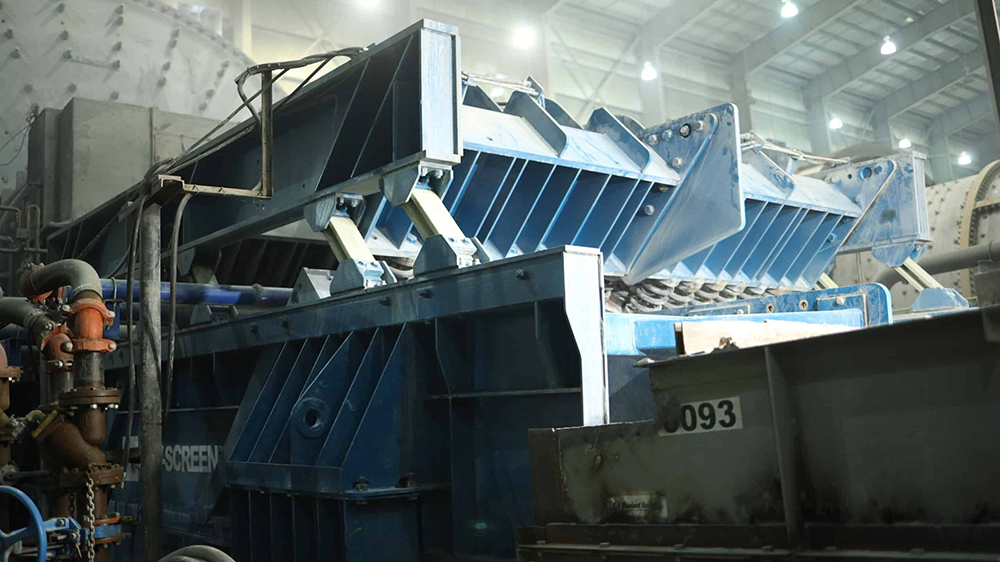
Improving Vibrating Screen Performance
Improve vibrating screen reliability through vibration analysis and maintenance

Jon Thornham
Founder
Laser Scanning & Reality Capture
Industrial facilities are complex environments—dense with piping, structural steel, platforms, equipment, and decades of modifications that often never make it into updated drawings. When engineers and construction teams plan new installations, tie-ins, or expansions, the most common source of delays and rework is simple: inaccurate or outdated field information.
Laser scanning and reality capture have completely changed how facilities document existing conditions. Using high-accuracy 3D scanning equipment, engineers can obtain a digital replica of an industrial environment—accurate down to millimeters—without shutting down operations or relying on hand measurements.
As more facilities look to reduce downtime, eliminate field rework, and modernize their engineering workflows, laser scanning has become the preferred approach for capturing as-built conditions. This blog will walk you through what laser scanning is, how it works, why it’s incredibly valuable, and how Vibration Engineers uses it to support industrial projects across the United States.
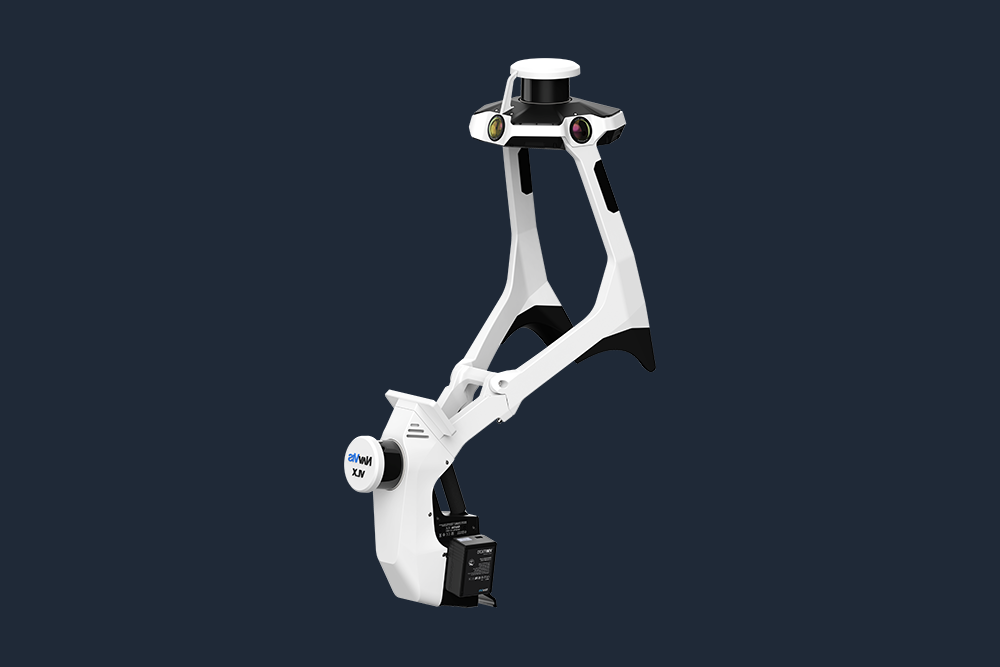
Laser scanning, also called reality capture or 3D scanning, is a method of collecting millions of precise measurements using a laser emitter, rotating mirror, and advanced imaging sensors. Modern scanners capture:
The output of a scan is called a point cloud—a detailed digital model consisting of millions of points representing the surfaces of everything scanned. Point clouds can be imported directly into CAD software, BIM platforms, and plant design tools. The result: an exact digital copy of your facility’s physical environment.
Traditional field measurement relies on tape measures, manual dimensions, outdated drawings, and assumptions. That approach often leads to inaccurate models, clashes in the field, and expensive rework. Laser scanning solves this by providing:
Scans capture real-world conditions with precision. Engineering drawings become correct, current, and aligned with what actually exists in the field.
Design teams can check new piping, equipment, and steel models against point clouds to ensure everything fits before anything is fabricated.
A small scanning team can document an entire process area in hours—not days.
Accurate data eliminates the number one cause of rework: wrong dimensions.
Laser scanning delivers a chain of benefits:
Laser scanning is one of the highest-ROI tools available to industrial engineering teams.
The process is straightforward but highly technical. Vibration Engineers follows a repeatable workflow to ensure accuracy and consistency across projects.
Before scanning begins, we work with facility personnel to identify:
This ensures we scan exactly what the project requires.
We deploy tripod-based scanners or mobile scanning systems depending on the location, density, and required accuracy. Scanners capture:
We typically perform dozens—or hundreds—of scan locations to build a seamless, complete model of the environment. Because the process is non-intrusive, scanning rarely requires shutdowns.
All individual scans are digitally stitched together using registration software to produce a single, unified point cloud with correct scale, alignment, and coordinates. We then:
The result is a highly accurate 3D dataset ready for engineering use.
Depending on client needs, we can deliver:
These deliverables integrate directly into:
By working within industry-standard formats, scanning fits seamlessly into engineering workflows.
Laser scanning is incredibly versatile and solves dozens of challenges across industrial operations. Some of the most common applications include:
Before installing a new pump, motor, skid, pipe spool, tank, or structural frame, engineers need accurate tie-in locations and dimensional clearance. Laser scanning ensures:
This is one of the highest-value uses of scanning.
Many facilities operate with outdated drawings—sometimes decades old. Scanning updates:
Having correct as-built information saves time and money across every maintenance and engineering activity.
Laser scanning provides extremely accurate geometry that can be used to assess:
Engineers can quantify movement or distortion with precision.
Laser scanning supports:
Good dimensional data reduces outage duration and improves safety.
A comprehensive point cloud becomes the foundation for long-term asset monitoring and digital twin development. Facilities can:
Digital twins are the future of industrial asset management, and laser scanning is the foundation.
Laser scanning significantly reduces the amount of field work, rework, and uncertainty associated with engineering projects. Facilities typically see ROI from:
The cost of a scanning project is almost always a fraction of the savings gained during construction, fabrication, or turnaround activities.
Laser scanning is more than just pressing a button on a scanner. High-quality reality capture requires:
Vibration Engineers provides:
We specialize in supporting EPC firms, facility engineering groups, maintenance teams, and construction planning staff.
Let us help you scan your facility and reduce your operation costs.
Laser scanning and reality capture have transformed how industrial projects are executed. Whether installing new piping, planning a turnaround, assessing structural conditions, or updating as-builts, scanning provides the accuracy and confidence modern facilities require.
As plants continue to modernize and expand, the need for precise, engineering-grade dimensional data becomes more critical. Laser scanning provides that confidence—reducing risk, preventing rework, and supporting smarter, faster decision-making.
Vibration Engineers delivers the scanning capability, experience, and engineering expertise needed to support projects of all sizes.
If you are seeing vibration issues on motors, fans, piping, turbines, or structural systems, this article covers only one piece of the diagnostic process. Our comprehensive Vibration Analysis and Engineered Correction guide shows how we use modal testing, ODS, FRFs, FEA, and field measurements to identify root causes and engineer permanent fixes.
Improve vibrating screen reliability through vibration analysis and maintenance
Jon Thornham
Founder
Author Details
Founder
Jon Thornham is the founder of Vibration Engineers, a professional mechanical engineer, and entrepreneur focused on solving complex vibration and reliability challenges across industrial sectors.