
Solving Stock Prep Pulsation
Learn how to get ride of stock prep pulsation to increase paper quality.

Jon Thornham
Founder
Piping Vibration Correction
In industrial settings, piping systems are critical for the transport of fluids and gases across various processes. These systems, while essential, can be prone to vibrations, which can lead to significant issues if not properly managed. Piping vibrations can cause fatigue, leaks, or even catastrophic failures, resulting in costly downtime and repairs. Understanding and mitigating these vibrations through comprehensive analysis is crucial for maintaining the integrity and longevity of piping systems. This article delves into the intricacies of piping vibration analysis and mitigation, focusing on resonance, pipe supports, and vibration testing.
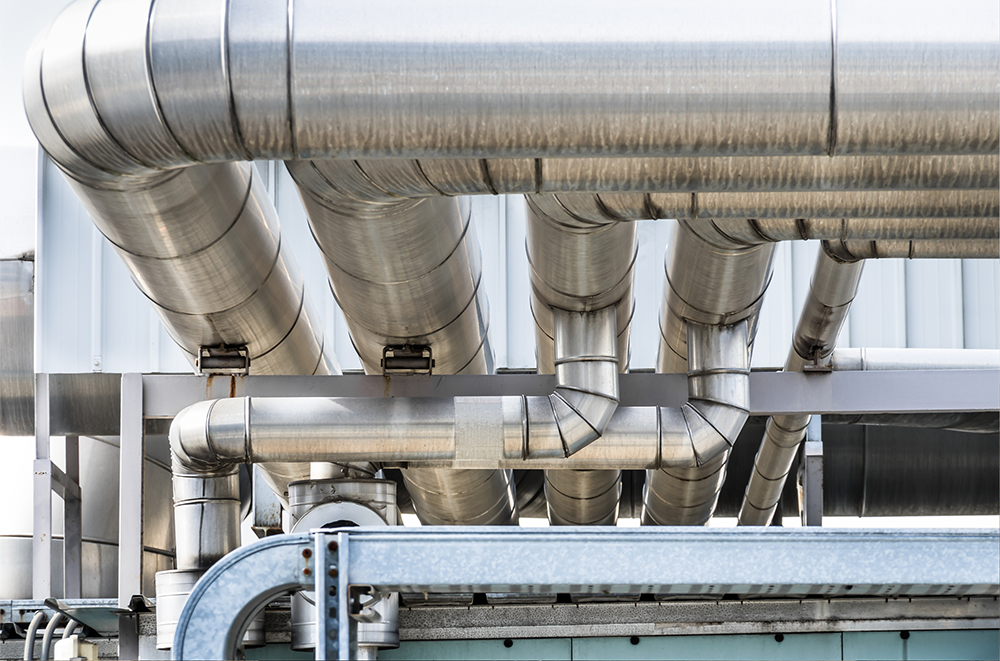
Piping vibration analysis is a vital process in ensuring the safe and efficient operation of industrial piping systems. Vibrations can originate from various sources, including pumps, compressors, turbulence, and flow-induced forces. If left unchecked, these vibrations can lead to mechanical failures and operational inefficiencies.
1.
Identifying Vibration Sources: Pinpointing the exact sources of vibration is the first step in addressing the issue. This involves understanding the operational conditions and mechanical interactions within the system.2.
Assessing Vibration Levels: Measuring the intensity and frequency of vibrations helps in determining whether they fall within acceptable limits or require intervention.3.
Predicting Failure Points: By analyzing vibration patterns, potential failure points in the piping system can be identified, allowing for preemptive measures to be taken.4.
Design Optimization: Vibration analysis aids in optimizing the design and layout of piping systems to minimize vibration risks.Resonance occurs when the frequency of external forces matches the natural frequency of the piping system, resulting in amplified vibrations. This phenomenon can have severe consequences, as the increased vibration amplitudes can lead to rapid fatigue and failure of the pipes.
Every piping system has its own natural frequency, determined by factors such as material properties, pipe length, diameter, wall thickness, and support conditions. When external excitations, such as pump pulsations or turbulent flow, occur at this natural frequency, resonance is triggered.
1.
Changing System Stiffness or Mass: Altering the stiffness or mass of the piping system can shift its natural frequency away from the excitation frequency. This can be achieved by adding mass (e.g., through pipe clamps) or increasing stiffness (e.g., using thicker pipes or additional supports).2.
Damping Mechanisms: Installing damping devices can help dissipate vibrational energy and reduce the impact of resonance. Vibration dampers, shock absorbers, and isolators are commonly used for this purpose.3.
Avoiding Resonant Frequencies: During the design phase, efforts should be made to avoid operating at frequencies close to the natural frequency of the piping system. This requires careful analysis and adjustment of operational parameters.Pipe supports are crucial components in managing and mitigating vibrations within piping systems. Properly designed and installed supports can significantly reduce vibrational amplitudes and prevent resonance.
1.
Rigid Supports: These supports provide fixed points of attachment for the pipe, restricting its movement in all directions. They are effective in controlling vibrations but can transfer vibrational energy to the supporting structure.2.
Flexible Supports: Flexible supports, such as spring hangers and resilient mounts, allow limited movement of the pipe while providing support. They help in isolating vibrations and reducing stress on the piping system.3.
Guides and Anchors: Guides restrict lateral movement of the pipe, while anchors provide fixed points that prevent longitudinal movement. Both are essential in controlling the direction and amplitude of vibrations.1.
Spacing and Placement: The spacing and placement of pipe supports are critical factors in vibration mitigation. Supports should be strategically placed to minimize the length of unsupported pipe sections and reduce vibrational amplitudes.2.
Support Stiffness: The stiffness of the support plays a significant role in determining its effectiveness in vibration control. Supports should be designed to provide adequate stiffness without introducing excessive rigidity.3.
Thermal Expansion: Pipe supports must accommodate thermal expansion and contraction to prevent additional stresses on the piping system. This requires the use of flexible supports and expansion joints.Vibration testing is an essential step in diagnosing and addressing vibration issues in piping systems. It involves measuring and analyzing vibrational behavior to identify sources, assess severity, and implement mitigation strategies.
1.
Operational Vibration Testing: This involves measuring vibrations during normal operation to assess the current state of the piping system. It helps in identifying real-time issues and monitoring changes over time.2.
Modal Analysis: Modal analysis determines the natural frequencies and mode shapes of the piping system. This information is crucial for predicting and mitigating resonance issues.3.
Impact Testing: Impact testing involves striking the pipe with a calibrated hammer and measuring the resulting vibrations. This method helps in identifying the dynamic characteristics of the piping system.1.
Baseline Measurement: Establish a baseline by measuring the current vibration levels of the piping system under normal operating conditions. This provides a reference point for future comparisons.2.
Data Collection: Use accelerometers and other vibration sensors to collect data at various points along the piping system. Ensure that measurements are taken over a range of operating conditions to capture all potential vibration sources.3.
Data Analysis: Analyze the collected data to identify the frequencies and amplitudes of vibrations. Use spectral analysis to pinpoint specific sources of vibration and assess their severity.4.
Diagnosis and Mitigation: Diagnose the root causes of vibration issues based on the analysis and implement appropriate mitigation measures. This may involve adjusting operational parameters, adding supports, or modifying the piping layout.5.
Verification: After implementing mitigation measures, conduct another round of vibration testing to verify their effectiveness. Ensure that vibration levels are within acceptable limits and that the piping system operates smoothly.Let us help you reduce piping vibration while maintaining reliable production.
In addition to traditional methods, advanced techniques can be employed to further mitigate vibrations in piping systems.
Dynamic vibration absorbers are devices tuned to a specific frequency, designed to reduce vibrational energy by creating a counteracting force. These absorbers can be attached to the piping system to target specific resonance frequencies and minimize their impact.
Tuned mass dampers consist of a mass attached to a spring-damper system, tuned to the natural frequency of the piping system. When vibrations occur, the damper oscillates out of phase with the piping, effectively reducing the overall vibration amplitude.
Active vibration control systems use sensors and actuators to continuously monitor and adjust the dynamic response of the piping system. These systems can actively counteract vibrations in real-time, providing superior vibration mitigation compared to passive methods.
Piping vibration analysis and mitigation are critical for ensuring the reliability and longevity of industrial piping systems. By understanding the sources and characteristics of vibrations, implementing effective support structures, and utilizing advanced mitigation techniques, it is possible to significantly reduce the risk of mechanical failures and operational inefficiencies.
Resonance and pipe supports play a pivotal role in managing vibrations, and comprehensive vibration testing is essential for diagnosing and addressing issues. Through meticulous analysis, strategic design, and continuous monitoring, industrial facilities can maintain the integrity of their piping systems and achieve optimal performance. Investing in vibration analysis and mitigation not only enhances system reliability but also contributes to overall operational safety and efficiency.
If you are seeing vibration issues on motors, fans, piping, turbines, or structural systems, this article covers only one piece of the diagnostic process. Our comprehensive Vibration Analysis and Engineered Correction guide shows how we use modal testing, ODS, FRFs, FEA, and field measurements to identify root causes and engineer permanent fixes.
Learn how to get ride of stock prep pulsation to increase paper quality.
Jon Thornham
Founder
Author Details
Founder
Jon Thornham is the founder of Vibration Engineers, a professional mechanical engineer, and entrepreneur focused on solving complex vibration and reliability challenges across industrial sectors.