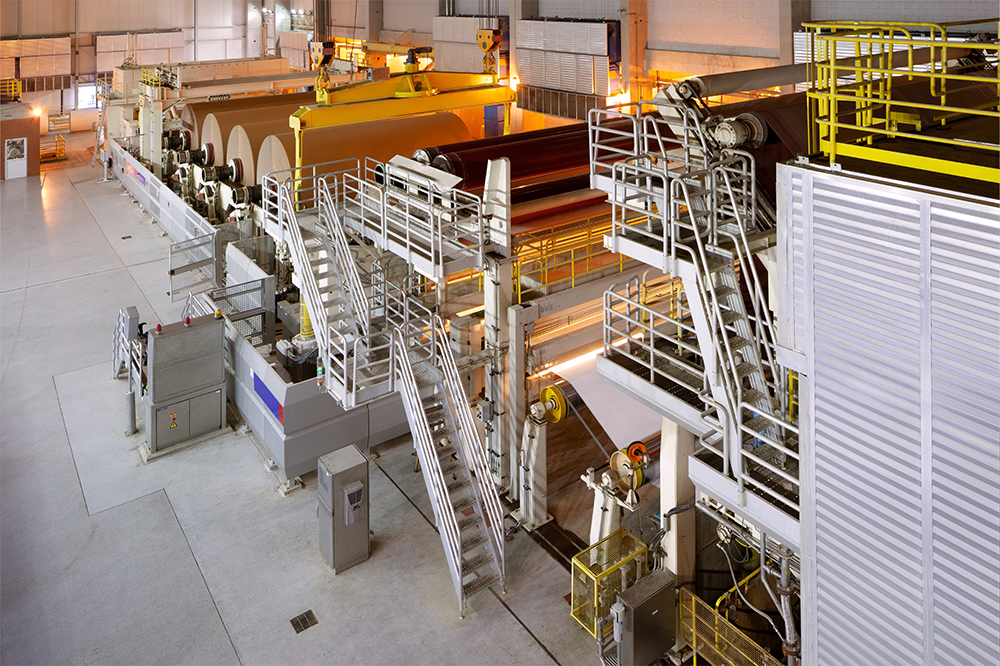
Improving Winder Reliability
Improve your winder reliability to meet production demands.

Jon Thornham
Founder
Press Roll Barring
The paper manufacturing industry is a complex and technologically advanced sector, with countless factors influencing the quality of the final product. Among these, the phenomenon of roll barring is particularly significant. Roll barring refers to the periodic marks or ridges that appear on the rolls of paper machines. These marks can severely impact the paper's quality, leading to issues such as uneven thickness, reduced strength, and visual defects. This article delves into the intricacies of roll barring, focusing on the roles of resonance, critical roll ratios, and their combined effect on paper quality and roll cover life.
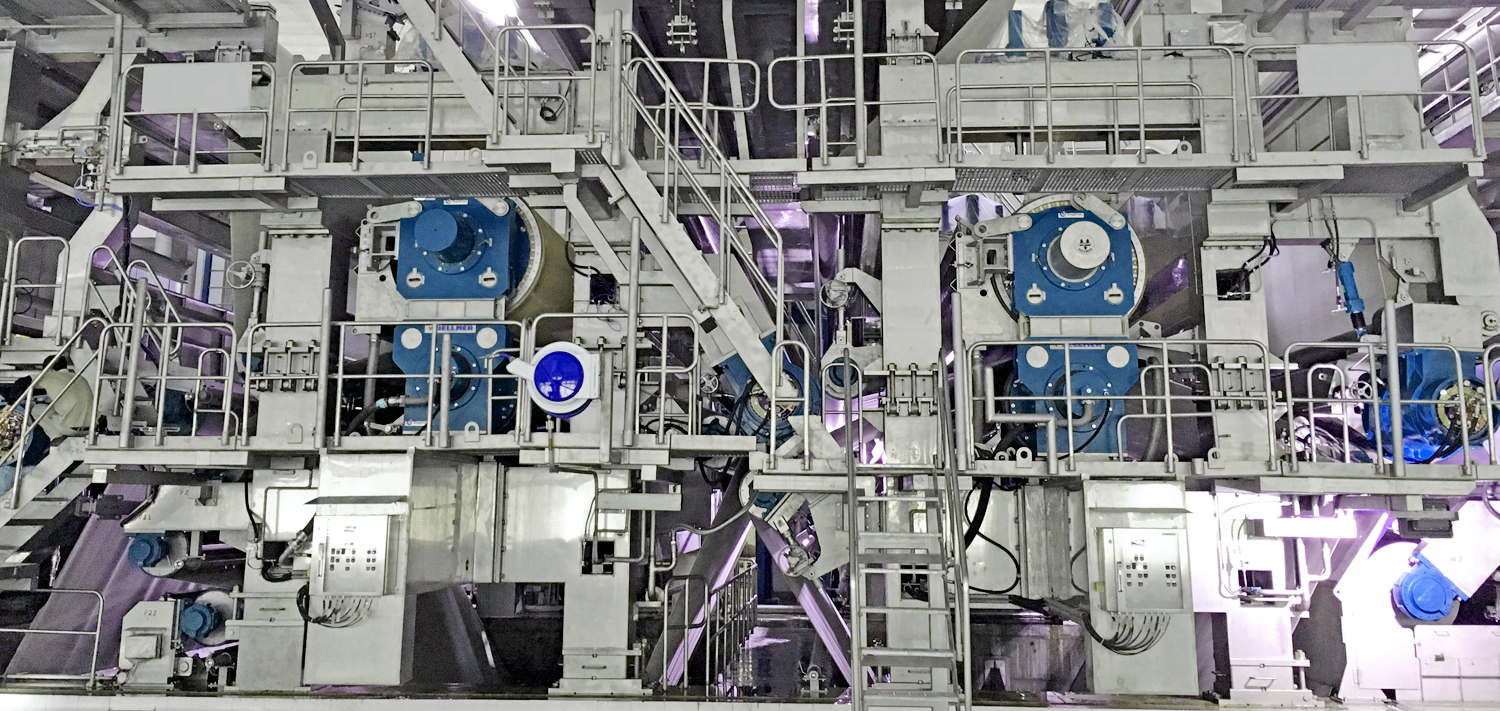
Roll barring is the formation of regular, patterned markings on the surface of rolls in paper machines. These markings typically manifest as transverse ridges or bands along the roll's circumference. Roll barring is a mechanical issue that can arise from various sources, including out-of-round rolls, vibration, wear and tear, or manufacturing defects.
The primary consequence of roll barring is its detrimental effect on the paper's surface quality. The ridges can transfer to the paper, causing visual and structural imperfections. These imperfections are often characterized by repeating patterns, which can lead to issues such as quality problems, reduced strength, and even paper breaks during production. Barring of soft roll covers can result in damage and reduced cover life.
Resonance is a fundamental concept in the study of roll barring. Resonance occurs when a system is exposed to a periodic force at its natural frequency, resulting in amplified vibrations. In the context of paper machines, resonance can happen when the rotational frequency of the rolls aligns with one of the machine's natural frequencies.
Every mechanical system has its natural frequencies, determined by its mass, stiffness, and damping properties. For paper machine rolls, these frequencies depend on the roll's material properties, dimensions, and the support structure. When the rotational speed of a roll matches one of these natural frequencies, resonance can occur.
Resonance in paper machines can be triggered by various sources, including unbalanced rolls, misaligned components, or external vibrations. Once triggered, resonance can lead to increased vibration amplitudes, causing roll barring. As roll barring severity increases, vibration amplitude is increased further exciting resonance. To mitigate this, it is essential to identify and address the sources of resonance within the machine.
Damping plays a crucial role in controlling resonance and preventing roll barring. Damping refers to the process of dissipating vibrational energy, thereby reducing the amplitude of oscillations. In paper machines, damping can be achieved through various means, such as modifying cover hardness, adjusting the machine's structural design, or implementing active vibration control systems.
By increasing the damping in a paper machine, it is possible to reduce the likelihood of resonance and, consequently, roll barring. Effective damping strategies can help maintain the stability of the rolls and ensure consistent paper quality.
Critical roll ratios are another key factor in understanding and preventing roll barring. These ratios refer to the relationship between the diameters of different rolls in a paper machine. When certain critical ratios are met, the likelihood of roll barring increases.
Critical roll ratios are determined by the dynamics of the paper machine and the interaction between different rolls. When the diameter ratios of rolls in a paper machine approach certain critical values, it can lead to resonance and increased vibration amplitudes. These critical ratios can vary depending on the specific diameter and operating conditions of the machine.
To identify critical roll ratios, it is necessary to conduct a detailed analysis of the machine's dynamics. This analysis can involve modeling the machine's behavior, performing vibration measurements, and identifying the natural frequencies of the rolls. Utilizing a Rusch chart can help assist in determining roll diameter ratios that will not result in barring.
One effective way to mitigate the impact of critical roll ratios is to adjust the diameters of the rolls in the paper machine. By modifying the roll diameters, it is possible to shift the natural frequencies and avoid resonance conditions as well as avoiding critical roll ratios. This can be achieved through careful design and maintenance practices.
For example, if a paper machine exhibits roll barring due to a critical roll ratio, adjusting the diameter of one or more rolls can help change the ratio and move the system away from resonance. This adjustment can be a cost-effective and practical solution for preventing roll barring and improving paper quality.
Roll barring can have significant adverse effects on the quality of paper produced by a machine. The presence of ridges or bands on the rolls can transfer to the paper, causing a range of quality issues.
One of the most noticeable impacts of roll barring is the creation of surface imperfections on the paper. These imperfections can manifest as visible lines, ridges, or bands on the paper surface. Such defects can be particularly problematic for high-quality printing applications, where surface uniformity is critical.
Surface imperfections caused by roll barring can also affect the paper's tactile properties. The ridges and bands can create a rough texture, making the paper less pleasant to touch and handle. This can be a significant issue for applications such as packaging or premium paper products.
Let us help you determine the cause of your roll barring and provide an engineered solution to correct the problem.
Roll barring can also compromise the structural integrity of the paper. The repeated patterns and ridges created by roll barring can weaken the paper's fibers, reducing its overall strength and durability. This can lead to issues such as reduced tear resistance, lower tensile strength, and increased susceptibility to damage during handling and use.
In applications where paper strength is critical, such as in packaging or industrial applications, the impact of roll barring on paper quality can be particularly severe. Ensuring consistent roll quality and minimizing roll barring is essential for producing strong and durable paper products.
Another significant impact of roll barring is on the printability of the paper. The surface imperfections caused by roll barring can interfere with the printing process, leading to issues such as uneven ink distribution, poor image quality, and reduced print clarity. This can be particularly problematic for applications such as newspapers, magazines, and high-quality printed materials.
Printability problems caused by roll barring can result in increased waste, as defective printed materials may need to be discarded. This can lead to higher production costs and reduced efficiency in printing operations.
Preventing roll barring requires a comprehensive approach that addresses the various factors contributing to its occurrence. By implementing best practices in machine design, maintenance, and operation, it is possible to minimize the risk of roll barring and ensure high-quality paper production.
Regular maintenance and inspection of paper machine rolls are essential for preventing roll barring. This includes checking for signs of wear and tear, ensuring proper alignment and balance, and performing regular vibration measurements. By identifying and addressing potential issues early, it is possible to prevent roll barring and maintain consistent paper quality.
Optimizing the design of paper machine rolls can also help prevent roll barring. This includes selecting appropriate cover materials, roll diameters, designing rolls with optimal dimensions and stiffness, and ensuring proper support and damping. By carefully designing the rolls, it is possible to minimize the risk of resonance and reduce the likelihood of roll barring.
Implementing advanced monitoring and control systems can help detect and mitigate roll barring in real time. These systems can include vibration sensors, automated inspection tools, and active vibration control mechanisms. By continuously monitoring the machine's performance and responding to potential issues, it is possible to maintain optimal operating conditions and prevent roll barring.
Ensuring that operators and maintenance personnel are well-trained in best practices for preventing roll barring is essential. This includes providing training on proper machine operation, maintenance procedures, and troubleshooting techniques. By promoting a culture of continuous improvement and knowledge sharing, it is possible to minimize the risk of roll barring and ensure consistent paper quality.
Roll barring is a complex issue that can significantly impact the quality of paper produced by a machine. Understanding the roles of resonance, critical roll ratios, and their combined effect on paper quality is crucial for preventing roll barring and ensuring high-quality paper production. By implementing best practices in machine design, maintenance, and operation, it is possible to minimize the risk of roll barring and produce paper products that meet the highest standards of quality. Through continuous monitoring, regular maintenance, and proper training, the paper industry can effectively address roll barring and maintain optimal production conditions.
If you are seeing vibration issues on motors, fans, piping, turbines, or structural systems, this article covers only one piece of the diagnostic process. Our comprehensive Vibration Analysis and Engineered Correction guide shows how we use modal testing, ODS, FRFs, FEA, and field measurements to identify root causes and engineer permanent fixes.
Improve your winder reliability to meet production demands.
Jon Thornham
Founder
Author Details
Founder
Jon Thornham is the founder of Vibration Engineers, a professional mechanical engineer, and entrepreneur focused on solving complex vibration and reliability challenges across industrial sectors.